


Happy New Year! I hope you have the means to face the problems that will come your way; this is the wish I feel like giving you, because wishing you a life without problems is a wish destined to fail, and wishing you “to be well” is too generic.
Anyway, the journey continues. As I mentioned, “The Soul Edge” disappointed the audience in terms of both audio and video—at least regarding plays and views—but there was an increase in YouTube subscribers. So, I shouldn’t label it a misstep; it was useful regardless. I still don’t understand much about Spotify… well, we’ll see with the next one, though the best approach is always not to expect a damn thing.
Physically, I’m much better, but I still have this cough. I couldn’t find the medicine that cured it years ago in the pharmacy anymore, so I had to buy it online. They make the things that actually work disappear; I give up, I just don’t get it.
I continue to love the Roman neighborhood where I live, but I hate many of the people who live here because they don’t make the slightest effort to protect the place they call home. Recently, they cleared a subway underpass of homeless people who were sleeping and dealing drugs there—I can’t even imagine what else. The city council had renovated the entire area; well, not even a week passed before they had already scribbled over most of the interior walls. If they were murals, you could see them as a form of art, but they are just “tags,” and ugly ones at that. So, what I wonder is simple: how do you satisfy these people? How do you satisfy people who want to live in squalor?
I’m a fan of easy solutions, but I won’t go into details because someone might get upset. However, let it be clear: I support strict measures against those who disturb the public peace. This is why I am looking into countries that actually care about enforcing the law. There are other types of laws I enjoy breaking—not the ones where the infraction harms the freedom of others.
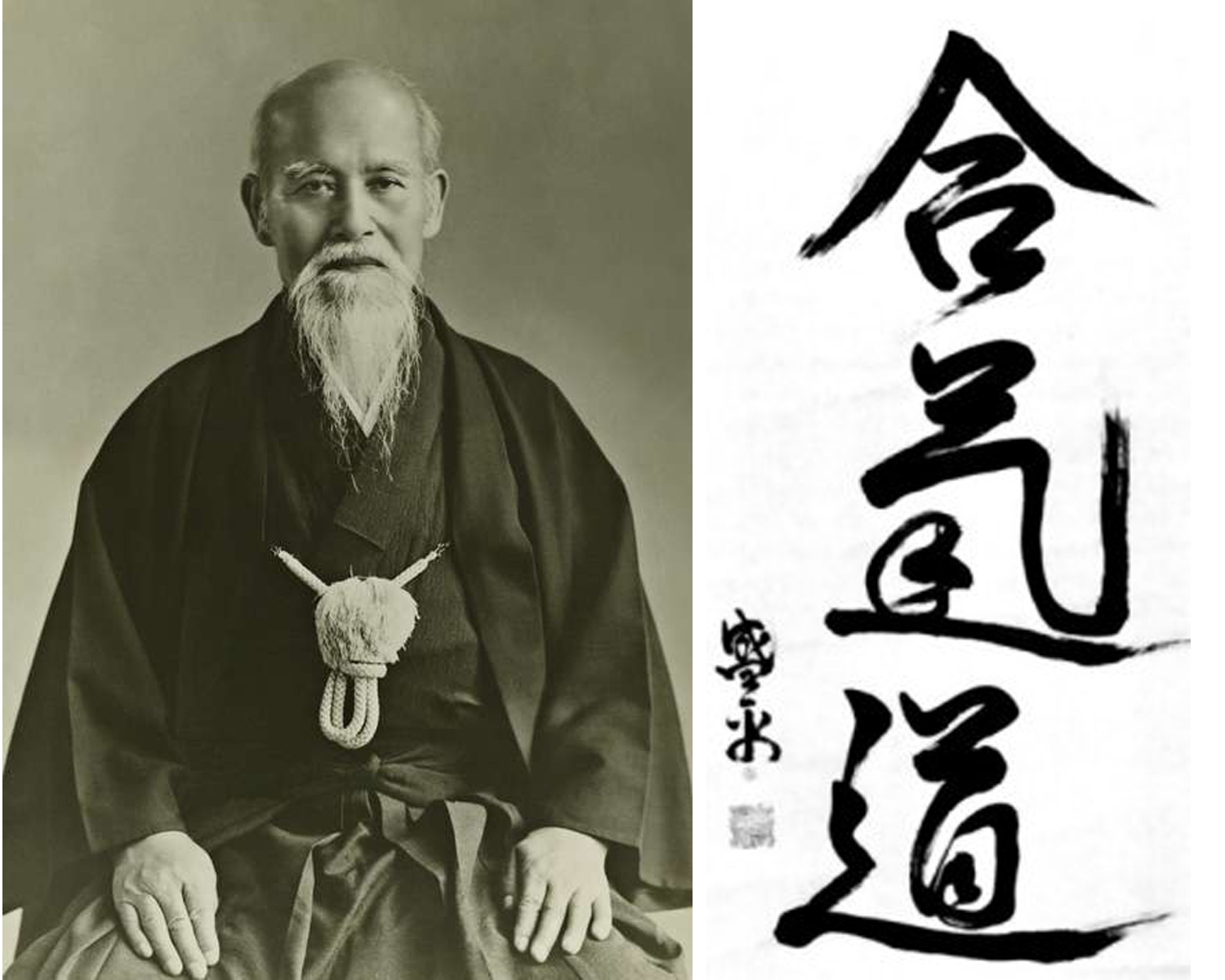
Anyway, let me talk about an art I practiced until a few years ago—an art that originated as a Japanese armed art founded by Morihei Ueshiba (I say this to remind those who tend to forget): Aikido.
Let me preface this by saying I’d shove weapons up the asses of those who publish videos where they move people with “mind power.” That is bullshit; it is not Aikido! Some say it’s all “ballet”… more bullshit! If your approach to Aikido is the same as if you were joining a dance class, go to the dance class instead—you’ll risk getting hurt a lot less.
In Aikido, there are grips, joint locks, strikes, and throws, and many forms cannot be understood if you aren’t armed! There are forms where the partner (who receives the technique) must grab one wrist, both wrists, or both arms, and someone might not understand the logic if they don’t imagine the other person holding a weapon—a knife, a staff, or a sword.
Aikido, when done seriously, is a useful discipline even if just to understand the basic rules of combat, such as:
- Moving off the line of attack.
- Synchronizing with the opponent’s breath (a sort of keeping time).
- Being present in the “here and now” (What is happening? Who is in front of me? Who is beside me? What is happening inside me? How am I managing the situation?).
- Concentrating on the Tanden (abdomen) to have a solid balance.
- The key to the discipline itself: Non-Resistance!
Non-resistance, in short, consists of not creating a wall against the force the opponent projects at you. How do you do it? You merge; you become one with that force to use it to your advantage and perhaps turn it back against them. Easy in words, difficult in practice. But like all things, it requires consistency and a curious spirit, along with the awareness that becoming a master of the discipline will take years. But they will be years well spent because, along the way, you will gain greater control over your body.
In the dojo, there is no “Oh no, I’m left-handed” or “I’m right-handed!” You’re an idiot—you practice the form on both the right and the left because you train 360 degrees. At least in theory! In practice, leg strikes aren’t trained much because it relates to balance; if you kick, you might lose your balance, and in Aikido, we emphasize keeping both feet on the ground. So, if you want to train your legs too, practice Karate, Krav Maga, or Wing Chun.
Even with just Aikido, you would certainly become less helpless than if you did nothing. I can’t say for sure that you’ll become great at street fighting, because not even a 7th Dan in Karate is guaranteed to handle a street brawl—that’s a completely different field. For street brawls, you’re better off being a hooligan. Martial arts serve to limit damage as much as possible; that’s it. Realize this, and you’ll save yourself from unpleasant situations. Combat is the last resort; always try to avoid it because there is no going back, and you could trigger other unpleasant collateral situations. Peace and love! But hey, do what you want.
To clarify the point about “ballets”: if the person receiving the technique (Uké) does not follow the person performing it (Tori), they risk damaging bones, muscles, and tendons—and then you’re in trouble! This is why it looks like a dance to some: if the Uké doesn’t hurry to follow the Tori, they get hurt. At high levels, forms are done fast. It’s one thing to practice with white belts, and another with black belts. In that case, you practice at the right rhythm because the forms have been internalized, and you are training the synchronization of breath and the ability to feel where the partner is going or where the imbalance has been created. You can use the same form for an hour, and you will almost never perform it the same way with every partner because Aikido is pure dynamism.
Practice real martial arts, but do it more for your body and mind than anything else. Try it, and think of me when you see the benefits. If you are in Rome, I feel obliged to recommend two Dojos based on your personal preferences:
- San Saba Parish: The Shinkokyu association course, led by Maestro Silvio Giannelli.
- San Damaso Parish: The Kokyukai association course, led by Gino Iacovone (heir to Maestro Gianni Cesaratto).
My “family” is the Kokyukai, but I have also practiced with Maestro Giannelli. My impression is that in Shinkokyu, there is a greater seriousness that is sometimes heavy; you can breathe a bit of hypocrisy and tension in the air. In Kokyukai, there is a more serene approach while still being an effective teaching method. The environment where you practice is very important; if you experience it like a family where you can joke around, you will grow without even noticing it. That is what you should look for: a place filled with people who spark something in your soul.
Best wishes!